Tim and Mike wrote a rare, sober assessment of AI. It is grounded in how technology actually evolves, not how we fear it might.
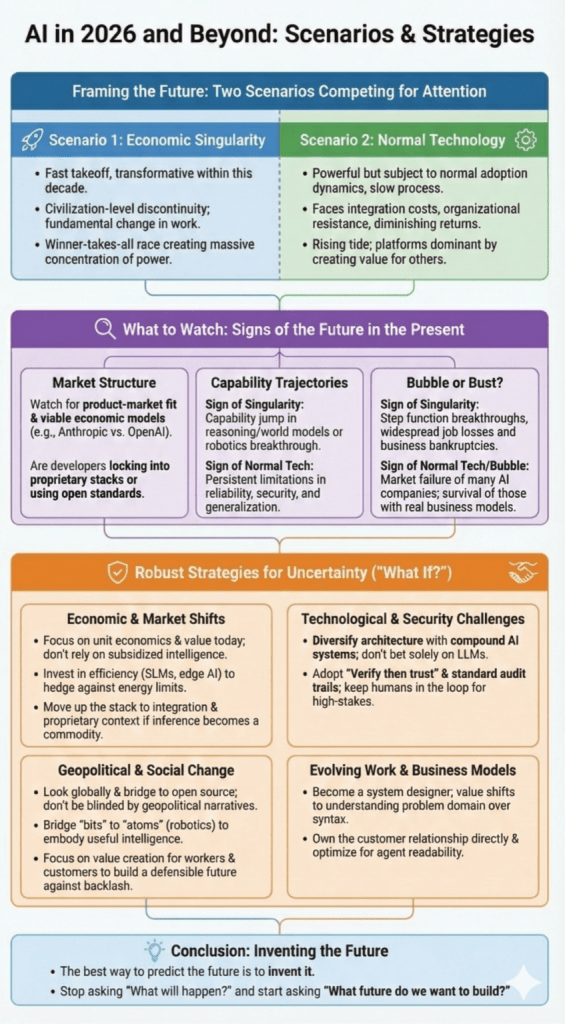
They suggest two scenarios playing out. The first is apocalypse, the second is more of the same.
In the first scenario, AI is an “economic singularity.” A complete upheaval of society. In this case, AI is able to perform most cognitive work that humans do today. The nature of work changes fundamentally. The question is not which jobs AI will take but which jobs it won’t.
The second is more mundane. AI just another normal technology. It is subject to all the normal dynamics of adoption, integration, and diminishing returns. Even if we develop true AGI, adoption will still be a slow process.
Like previous waves of automation, it will transform some industries, augment many workers, displace some, but most importantly, take decades to fully diffuse through the economy.
Which is more likely? We don’t know. Anyone who claims certainty is selling something. Sometimes it’s ok to say “I don’t know.”
As Wittgenstein wrote, “I cannot bend the happenings of the world to my will: I am completely powerless.” I don’t know about you, but I find that reassuring.
Reading thought-pieces from “AI consultants” on LinkedIn makes me anxious, not energised. As Paul Ford notes, it’s a constant stream of “that skill you’ve been honing for the past 15 years is now less valued.” Learn AI or be a serf. The anxiety is real.
What’s Actually Changing
But….there are some things you can start doing. In the classes I teach, the gap between AI-fluent PMs and AI-hesitant ones is like speaking French in France versus not speaking it at all.
Understanding how to prototype using chatbots (Claude, ChatGPT etc) and cloud development environments (Bolt, Replit etc) are table stakes for PMs. You don’t need to master local development assistants unless you’re planning to code extensively, but understanding how to prototype and test with users using AI tools is no longer optional, it’s baseline literacy.
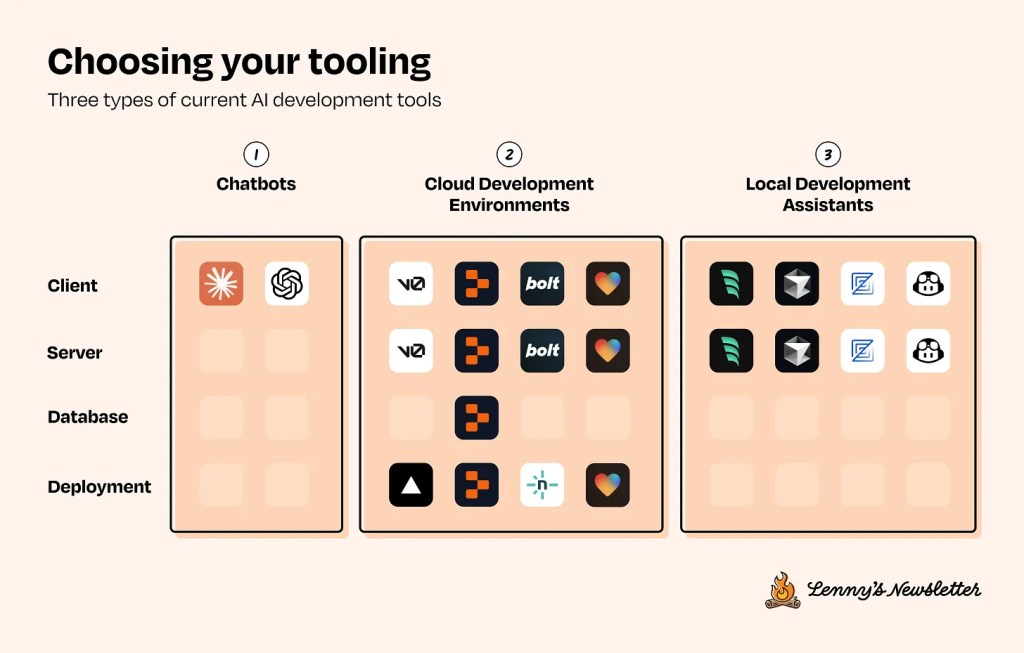
The barrier to software creation is now nearly zero. In this world, the PM role shifts from “ship the right features” to “diagnose real problems and prevent building the wrong things.”
In a workplace drowning in easy-to-build software, knowing what not to build becomes more valuable than knowing how to build it.
This shift towards what Alex Komoroske calls “disposable software”. Apps built for a single meeting or family vacation, then discarded.
Your Robust Strategy
Tim & Mike suggest identifying strategies that work in either scenario. For early-career PMs, this could mean:
Watch these signals:
- Are companies in your industry hiring fewer vendors and building more custom software internally?
- Is the engineering-to-PM ratio shifting in your sector?
- Are users in your domain starting to build their own tools?
- Which AI tooling patterns are your competitors adopting?
Build skills that survive both futures:
- Domain expertise in understanding user problems and business context matters more than tool fluency, but you need enough fluency to prototype and validate ideas
- Practice diagnosing whether problems are worth solving before anyone writes code
- Learn to meet engineers halfway with evidence-backed prototypes
The future is genuinely uncertain. Your advantage isn’t in predicting it, but in learning to read it as it emerges.
 Gordon MacRae Blog
Leave a comment